
Date Posted:16 October 2026
How Bushfires Can Create Thunderstorms
Most of us know that lightning can start a bushfire. But did you know a bushfire can also create a thunderstorm?
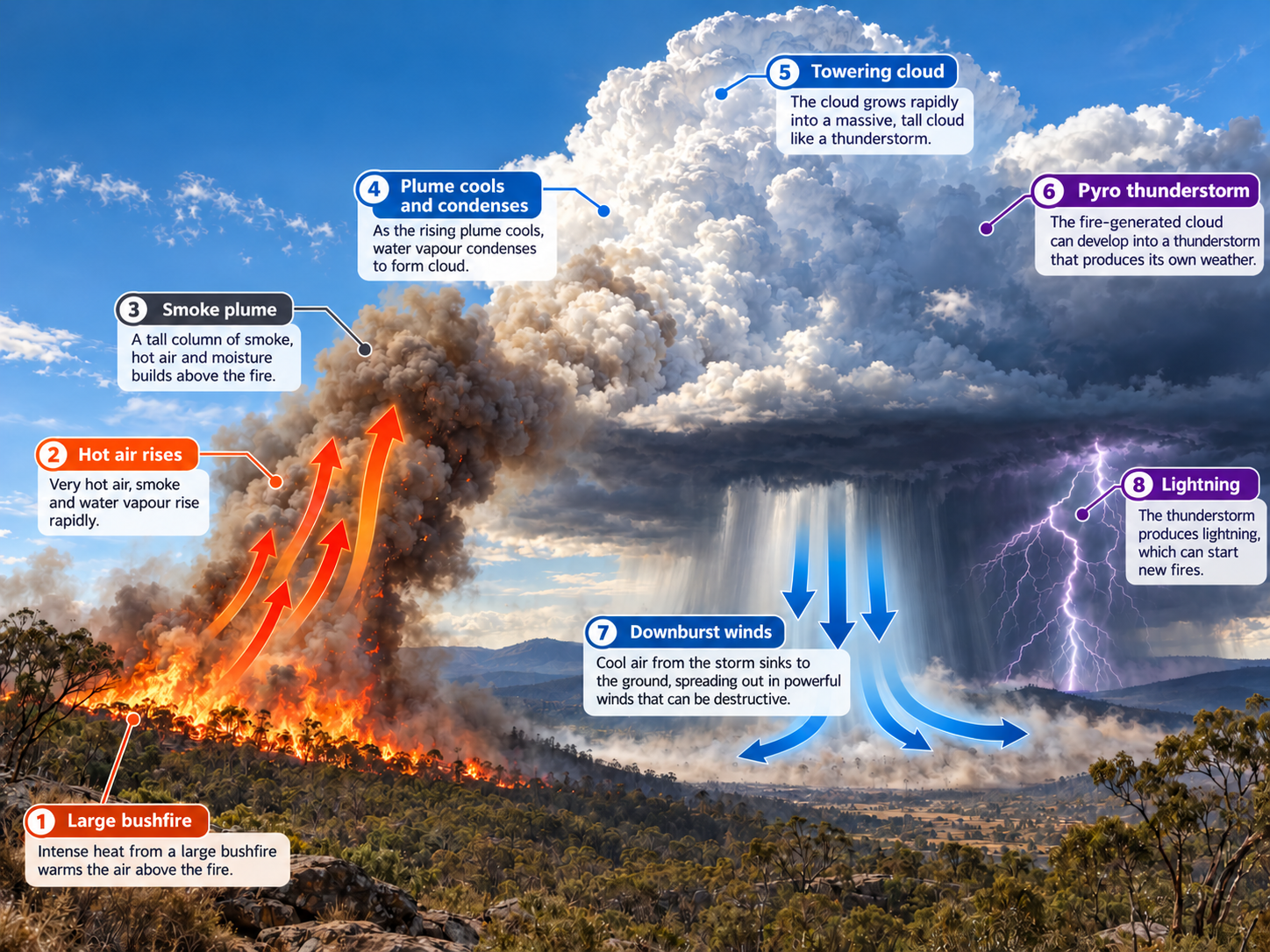
Under the right conditions, an intense bushfire can generate a towering cloud known as pyrocumulonimbus, or a fire-generated thunderstorm. This helps explain why some bushfires can become so unpredictable.
From rising smoke to storm cloud
The process begins with intense heat. As a bushfire burns, hot air rises rapidly, carrying smoke upwards and drawing surrounding air into the plume.
As this air rises, it expands and cools. If it cools enough, water vapour condenses into tiny droplets, forming a cloud above the fire. This is called a pyrocumulus cloud.
Condensation also releases heat, helping the air rise further. If the atmosphere supports continued growth, the cloud can develop into a much larger pyrocumulonimbus cloud.
Not every bushfire produces a thunderstorm. It takes the right combination of fire intensity and atmospheric conditions.
Why does this make a bushfire more dangerous?
A fire-generated storm can influence the fire beneath it, creating additional hazards:
-
Powerful winds: Strong air movements can increase fire intensity and cause unexpected changes in direction.
-
New fires from embers: Rising air can lift burning material high above the fire and carry it downwind, where it may start spot fires.
-
Lightning: These clouds can produce lightning that starts additional fires.
-
Downbursts: Air cooled by evaporating rain can rush towards the ground and spread outwards, producing strong, gusty winds that push fire in different directions.
Although rain can form in these clouds, a storm above a bushfire should never be taken as a sign that the danger has passed. Its winds and lightning can create further problems.
What does this mean for your bushfire plan?
For households, rural businesses and travellers, the practical lesson is to make decisions early.
Fire Authorities advise that the safest plan is to leave early, before a fire starts, and go somewhere with low fire risk. Waiting to see flames, smell smoke or receive a warning can leave you with fewer safe options.
Before dangerous fire weather arrives:
-
Know your trigger for leaving.
-
Decide where you will go and how you will get there.
-
Have essential supplies ready.
-
Plan for children, pets and anyone needing extra help.
-
Check Fire Danger Ratings and follow your local fire authority’s advice.
At Thermaguard, we encourage people to understand bushfire risks as part of their preparation.
For help taking the next step, read our family bushfire planning guide.