Date Posted:24 September 2026
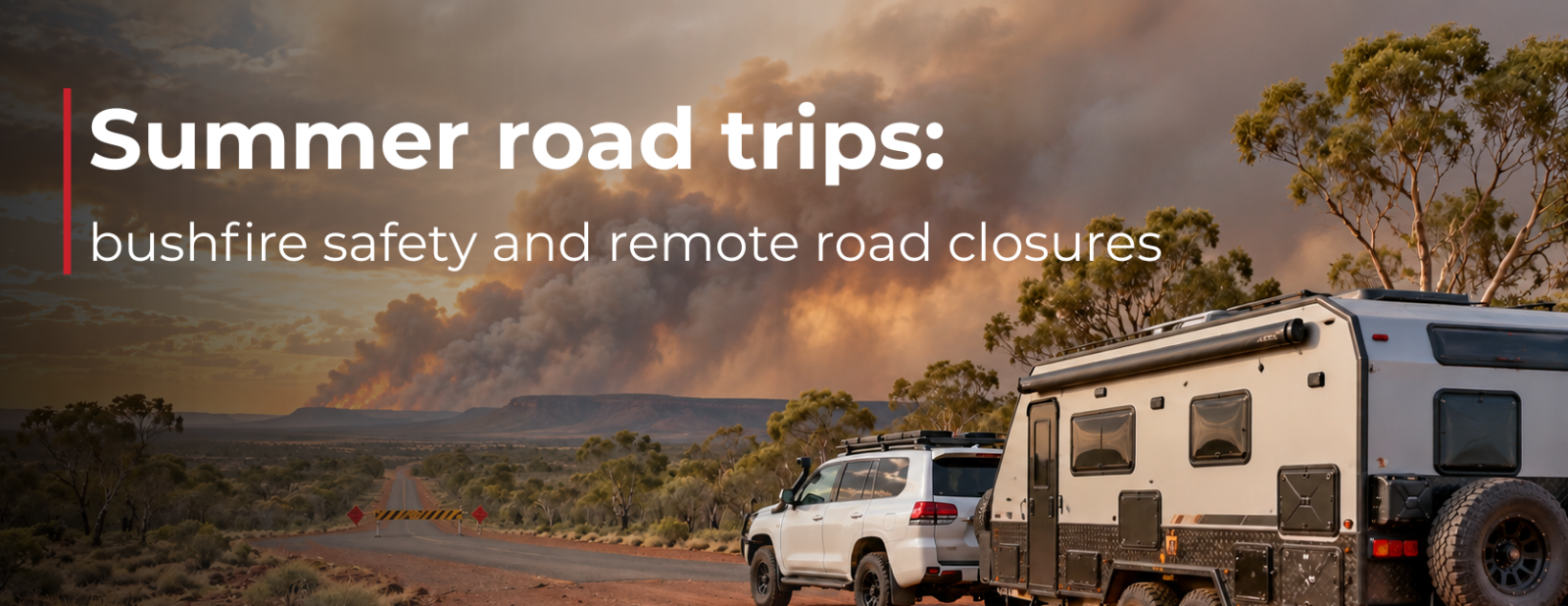
Summer is a popular time to explore Australia by caravan or 4WD. But bushfires can quickly affect your route, close roads and change your holiday plans. In remote areas, a detour may mean extra fuel, long distances or roads unsuitable for towing.
Its encouraged for travellers to make bushfire planning part of their trip preparation. Knowing where to find reliable information is a good place to start.
Check before you travel
Before each day’s drive, check the weather, fire danger rating and current bushfire warnings for your route and destination.
Fire danger ratings describe how dangerous a fire could be if one starts. They are different from warnings about an existing fire. Check both through the relevant state or territory fire service.
Fire authorities recommend changing or postponing travel when fire conditions make it unsafe. Leaving a bushfire risk area early, before a fire starts, is the safest option.
Where to check road closures
Save these official road information services before you leave:
-
South Australia: Outback Road Warnings for remote roads, and Traffic SA for other road incidents and works.
-
Western Australia: Main Roads WA Travel Map.
-
Northern Territory: NT Road Report.
-
Queensland: QLDTraffic.
-
New South Wales: Live Traffic NSW.
-
Victoria: VicTraffic.
-
Tasmania: Transport Tasmania for roadworks and TasALERT for emergency information.
Read the full notice for each road. “Open” may still mean restrictions apply. South Australia’s outback map, for example, includes a category for 4WD vehicles under three tonnes with no towing.
Stay informed along the way
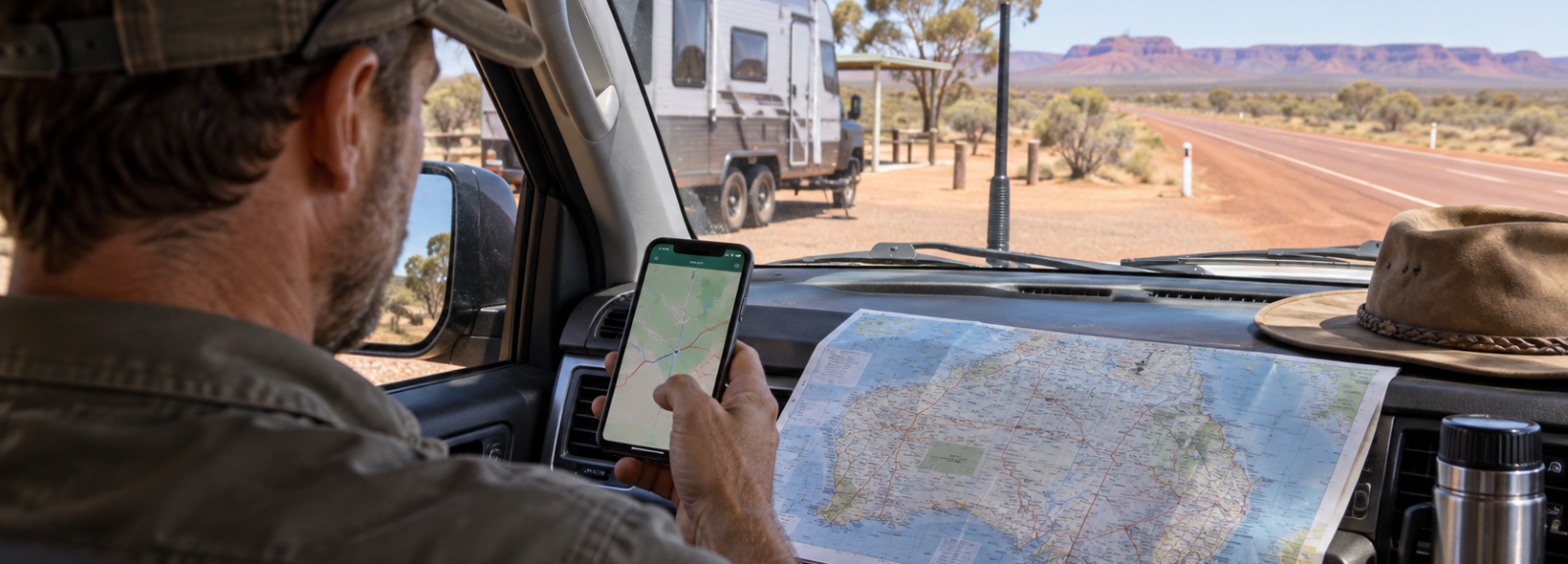
Check for updates before leaving a town or an area with mobile reception. Download maps beforehand, but remember that offline maps cannot show new closures.
Use road reports alongside fire warnings and weather updates. Check these official apps and websites for the areas you’re travelling through:
- South Australia: Alert SA app.
- New South Wales: Hazards Near Me NSW app.
- Victoria: VicEmergency app.
- Western Australia: Emergency WA app.
- Tasmania: TasALERT app.
- Queensland: Queensland Fire Department warnings website.
- Northern Territory: SecureNT alerts and warnings website.
- Australian Capital Territory: ACT Emergency Services Agency warnings website.
Set up notifications and watch zones where available, and update them as you travel. Check more than one source, especially before leaving mobile reception.
Carry a battery-powered radio and avoid relying on a single source of information. Let someone know your route, expected arrival time and any changes to your plans.
Be ready to change plans
Identify an alternative route or a safe place to stop before entering a remote area. Carry extra drinking water, food, essential medication and enough fuel for the planned journey and a possible detour.
At caravan parks and campsites, ask about local emergency arrangements and where to relocate if conditions worsen.
Follow road closure signs and emergency instructions. Never drive around a barrier or assume a 4WD can safely get through.
If you see smoke ahead, slow down. Fire authorities advise turning around where safe and heading towards a township or designated Bushfire Safer Place.
A flexible itinerary gives you time to make safer decisions. Check conditions, leave early when needed and be prepared to postpone the next leg of your trip.
Include bushfire protection in your travel preparations
Our Supertherm Lite personal bushfire blanket offers a compact option for your vehicle’s emergency kit. A blanket is a backup measure—checking warnings, avoiding fire-affected areas and leaving early remain essential.