
Date Posted:20 November 2026
Lithium-ion battery fires: why they happen and how to reduce the risk
A cordless drill battery on the workbench, an e-bike in the garage and a phone on charge all have something in common. Lithium-ion batteries store a lot of energy in a small space, which makes them useful for everyday equipment. If a battery is damaged, exposed to extreme heat or charged with incompatible equipment, that stored energy can be released very quickly.
What happens inside a failing battery?
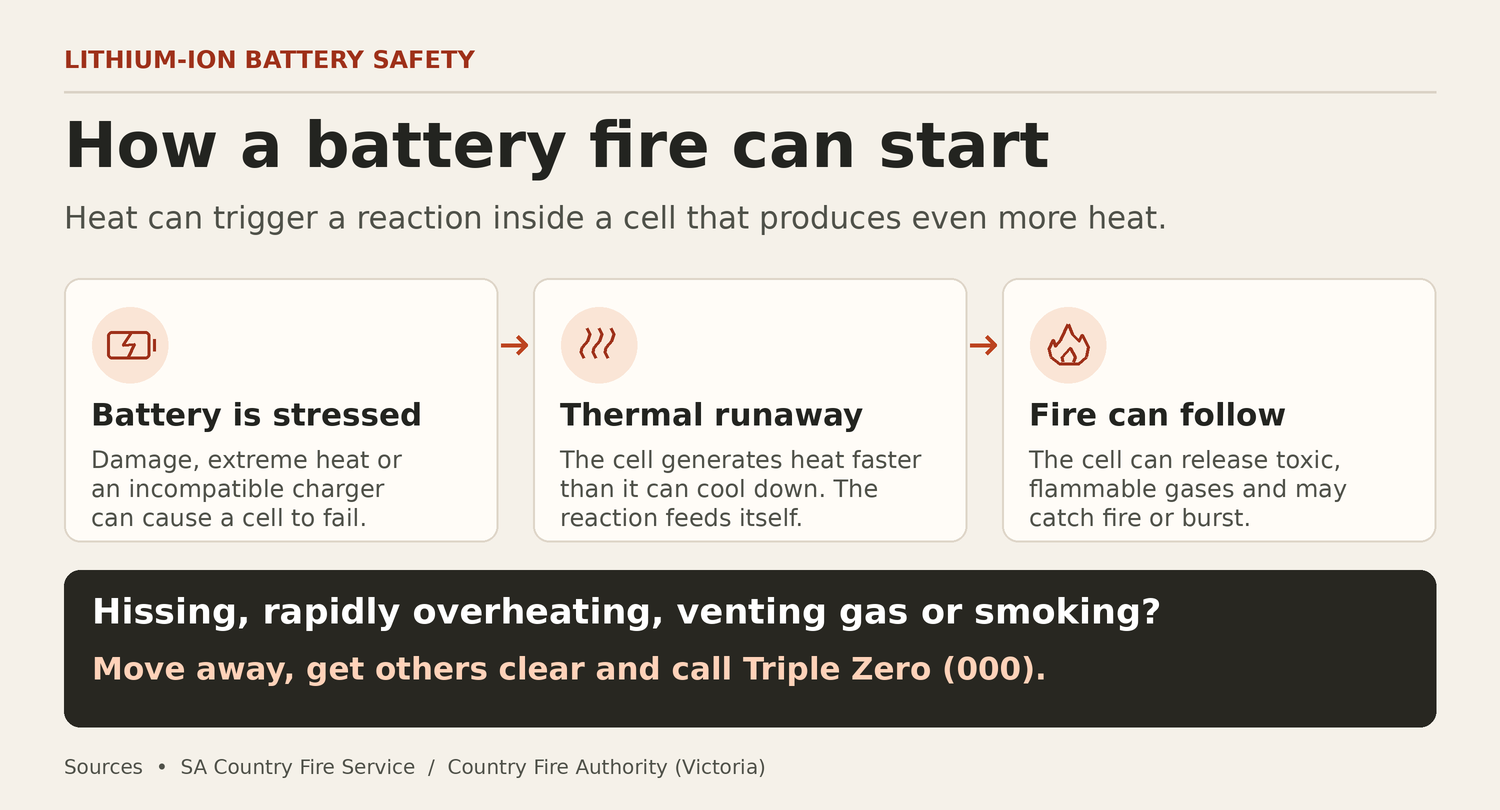
When a battery cell gets too hot, chemical reactions inside it can generate more heat than the cell can lose. That extra heat speeds up the reactions, which produce still more heat. This self-feeding process is called thermal runaway. A failing cell can release toxic, flammable gases, catch fire or burst. The fire can be difficult to extinguish, and the battery may reignite after the flames appear to be out.
Check where and how you charge
The spot where you plug in matters. A battery fire in a hallway or beside a doorway can cut off your escape route. Keep exits clear, especially when charging e-bikes, e-scooters and other larger devices. Choose a hard, non-flammable surface such as concrete or tiles, away from cardboard, bedding and other materials that can catch fire.
- Use the charger supplied with the device or one the manufacturer recommends for that model. A plug that fits can still deliver the wrong voltage or current.
- Charge while you’re awake and nearby. Let batteries cool after use and disconnect them once charging is complete.
- Store batteries in a cool, dry place out of direct sunlight. Bring tools and spare batteries inside when you’re leaving a vehicle parked in the heat.
Recognise the warning signs and act early
A swollen case, leaking fluid or visible damage is a reason to stop using or charging the battery. If it’s hissing, rapidly overheating, releasing gas or smoking, get everyone clear and call Triple Zero (000) from a safe place. Tell the operator a lithium-ion battery is involved. If there’s smoke or fire, leave the battery where it is, close doors behind you if safe, and stay outside until firefighters say it’s safe to return.
Old batteries can also start fires in rubbish trucks and recycling facilities. Take used batteries to an approved drop-off point and keep them out of household rubbish and recycling bins. For a damaged battery that is cool and stable, contact your local council for disposal instructions.